

There are times when a business owner can feel that the company is no longer moving in one direction.
Employees begin to lose focus.
Instructions are not clearly understood.
Sales slow down.
Problems appear in several places at the same time.
When this happens, the owner often feels pressure to act immediately.
A new advertising campaign is launched.
More products are added.
Prices are changed.
Employees are given more work.
Another project is started in the hope that it will create a breakthrough.
But when an organization is already losing its center, adding more activity can make the confusion worse.
Today’s I Ching lesson for business owners comes from Hexagram 59, Line 2.
Its message is simple:
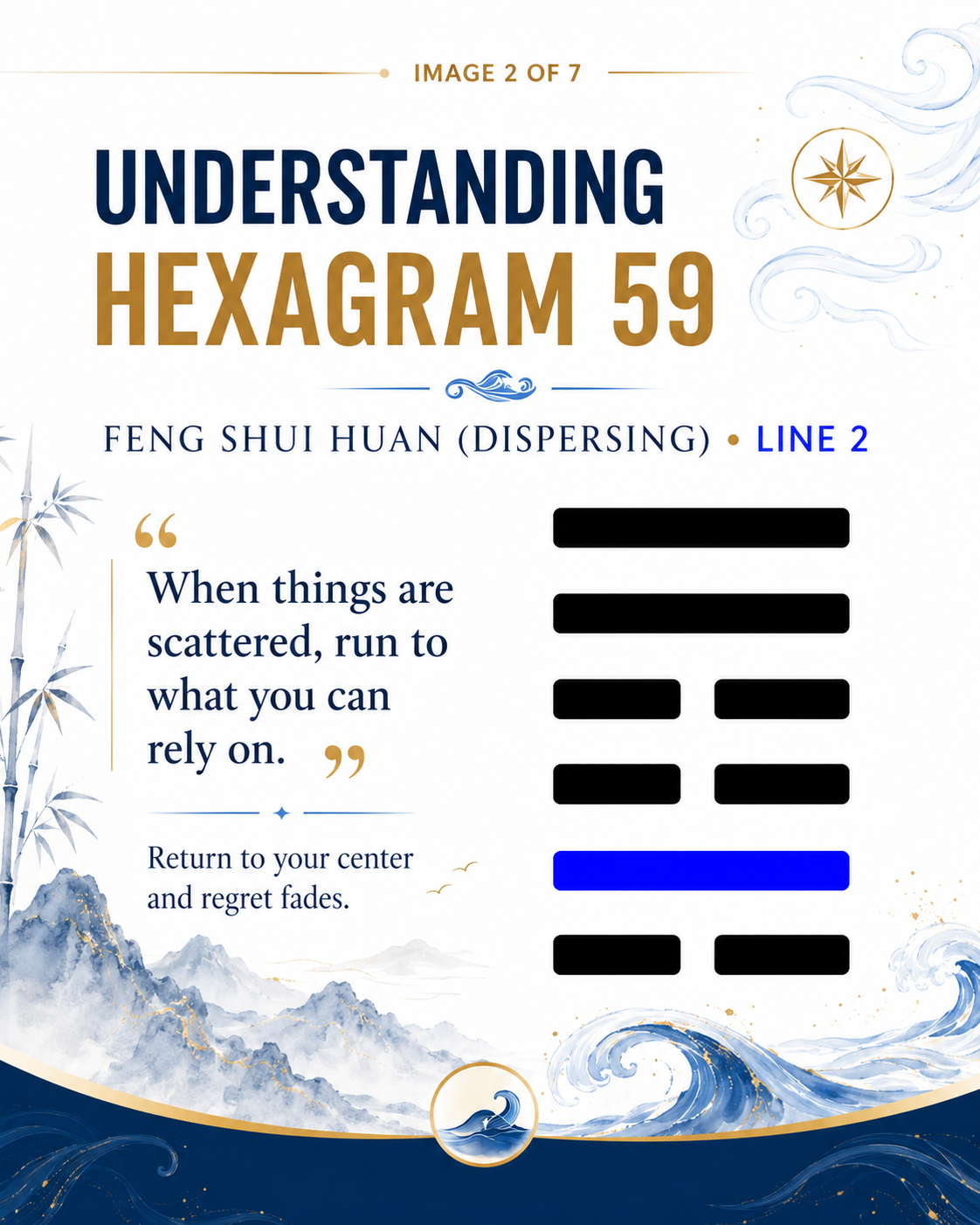
When things are scattered, run toward what you can rely on. Then regret disappears.
This does not mean that a business owner should avoid responsibility or depend blindly on someone else.
It means that when the company’s energy is scattered, the owner must return quickly to the foundation that has already proved its value.
That foundation may be a loyal customer.
It may be a product that consistently generates revenue.
It may be a trusted employee who understands the workplace better than anyone else.
It may be a simple business process that has worked for years.
The important point is this:
When everything feels unstable, do not begin by searching for something new. Begin by returning to what is reliable.
Why Businesses Lose Their Center
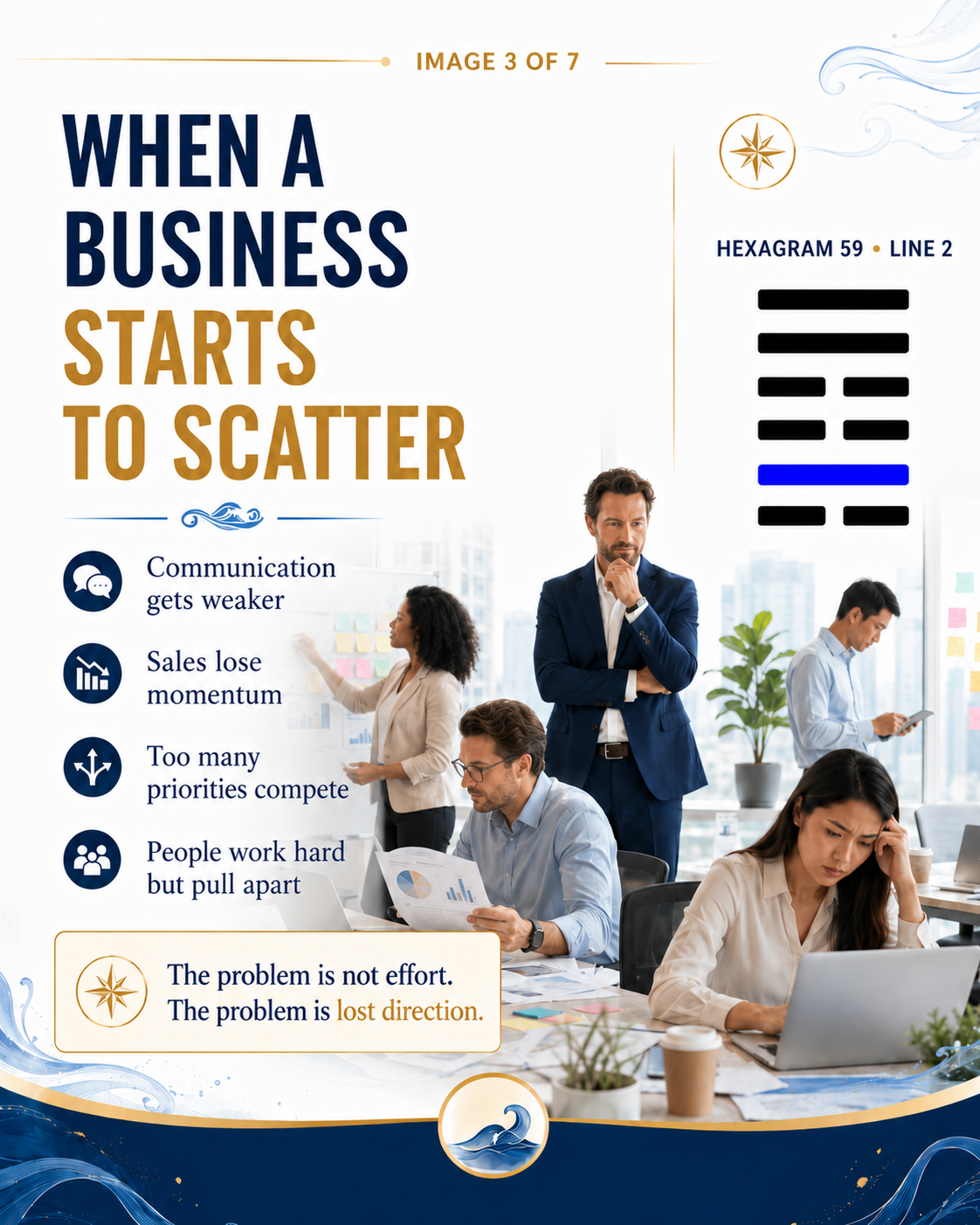
A company rarely loses direction in one dramatic moment.
It usually happens gradually.
The owner starts too many projects.
The team receives different priorities every week.
Employees are told to increase sales, improve service, reduce costs, create content, and finish reports at the same time.
Each task may seem reasonable by itself.
But when every task becomes urgent, nothing is truly important.
The company begins to scatter.
Employees spend more time reacting than thinking.
Managers focus on protecting themselves rather than solving problems.
Reports become less honest because people fear criticism.
The owner becomes frustrated because progress appears slow.
Then the owner pushes harder.
This creates a dangerous cycle.
More pressure creates more confusion.
More confusion creates more mistakes.
More mistakes create even more pressure.
Hexagram 59 describes this kind of situation well.
It represents dispersion.
Energy, trust, attention, and direction are moving apart.
The answer is not always stronger control.
Sometimes the answer is to rebuild a shared center.
The Meaning of Hexagram 59, Line 2
The second line of Hexagram 59 advises us to move toward a place of support.
In business language, this means identifying the people, products, customers, and principles that still hold the organization together.
The word “run” is important.
It suggests that the owner should not wait too long.
When a team is losing trust, silence makes the problem worse.
When customers are leaving, delayed action increases the damage.
When employees no longer understand the company’s priorities, another vague meeting will not solve the problem.
The owner must move quickly toward what is dependable.
But this is not the same as making a rushed decision.
A rushed decision comes from fear.
A focused decision comes from clarity.
Hexagram 59, Line 2 does not say, “Do anything quickly.”
It says, in effect:
Move quickly toward the right center.
That distinction matters.
Do Not Try to Save Everything
One of the hardest lessons for a business owner is that not every project deserves to continue.
Some products take too much time and create too little profit.
Some advertising channels consume money but bring no measurable response.
Some meetings continue only because they have always existed.
Some customers demand excessive attention while providing little long-term value.
Some services make the company look busy but do not strengthen the business.
When a company is stable, it may have enough resources to experiment.
When the company is scattered, however, every unnecessary activity weakens the center.
This is why Hexagram 59, Line 2 is not a message about doing more.
It is a message about gathering what has been dispersed.
The owner must ask:
What should we continue?
What should we stop?
What should receive more attention?
What is using resources without producing real value?
A company becomes stronger not only by adding good things, but also by removing what divides its attention.

Return to Your Core Customers
When sales fall, business owners often become obsessed with attracting new customers.
New customers are important.
But during an unstable period, the fastest path to recovery may be found among the people who already trust the company.
Who has purchased from you repeatedly?
Who recommends your company to others?
Which customers understand the value of your service?
Which customer group produces the highest level of repeat business?
These customers are not only a source of revenue.
They are also a source of information.
Their behavior can reveal what the company is still doing well.
Instead of immediately creating a new product for an unknown audience, speak to the customers who already know you.
Ask them why they continue to choose your company.
Ask what they value most.
Ask what has become inconvenient.
Ask what would make them return more often.
A trusted customer can sometimes show the business owner where the company’s real center is.
Return to Your Main Product or Service
Many businesses become complicated because they continue adding products without removing anything.
At first, more choice appears to be an advantage.
Over time, however, it can weaken operations.
Inventory becomes difficult to manage.
Employees need more training.
Marketing messages become unclear.
Customers no longer understand what the company is best known for.
When the business begins to scatter, the owner should identify the product or service that creates the clearest value.
It may not be the most exciting offer.
It may not be the newest.
It may not create the highest profit in a single transaction.
But if it consistently attracts customers and supports repeat business, it may be the foundation the company needs.
Ask:
Which product creates stable revenue?
Which service produces the fewest complaints?
Which offer is easiest for customers to understand?
Which part of the business could survive even if everything else were temporarily removed?
That is often where the company’s center is hiding.
Return to the People You Can Trust
When business becomes difficult, the owner may become suspicious of employees.
The owner may think:
Why are they not working harder?
Why are they not taking responsibility?
Why are they not reporting problems earlier?
Sometimes employees do need stronger accountability.
But sometimes the real issue is that the company’s direction has changed too often.
Employees cannot focus when priorities are constantly replaced.
They cannot take ownership when decision-making standards are unclear.
They cannot report honestly when every problem is treated as personal failure.
Before blaming the team, the owner should ask whether the organization has given people a stable center.
Who understands the customers best?
Who knows where time is being wasted?
Who sees operational problems before management does?
Who continues to speak honestly, even when the message is uncomfortable?
That person may be more valuable than the loudest or most confident employee.
Hexagram 59, Line 2 reminds the owner to move toward trustworthy support.
This may mean listening carefully to the person closest to the actual work.
Not every employee should control strategy.
But the people doing the work often see the truth earlier than the owner.
What Business Owners Should Avoid
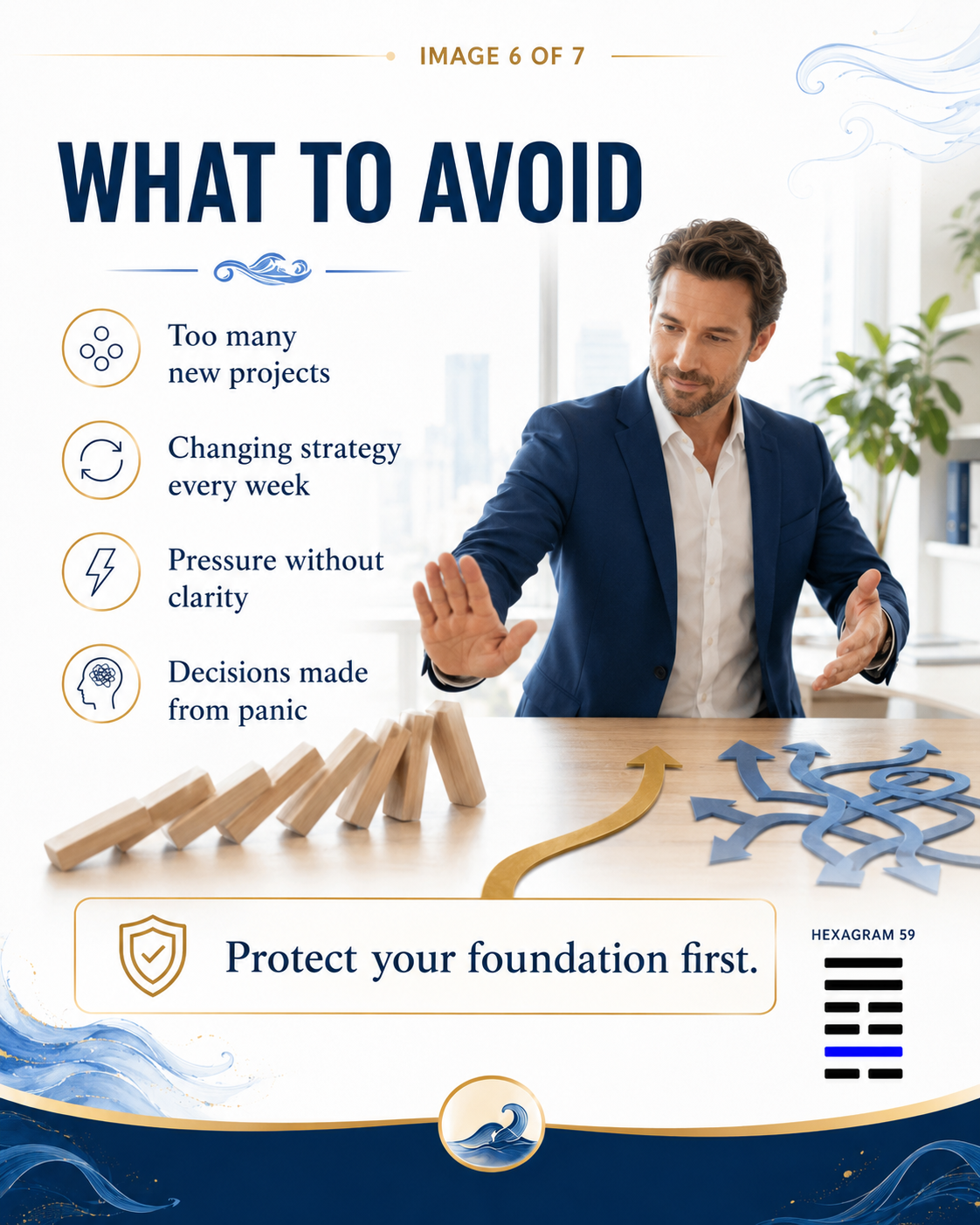
When the company is unstable, four reactions are especially dangerous.
The first is starting new projects without clear priorities.
The second is changing strategy too frequently.
The third is increasing pressure without removing obstacles.
The fourth is making decisions only to reduce the owner’s anxiety.
An action can feel productive while still being harmful.
Changing prices may create the feeling of control.
Launching a new advertisement may create temporary hope.
Giving stronger instructions may make the owner feel decisive.
But none of these actions will solve the problem unless they strengthen the company’s center.
Before making a major change, ask:
Does this decision help the core customer?
Does it strengthen the main product?
Does it make the team’s work clearer?
Does it improve cash flow?
Does it build trust?
When the answer is unclear, the decision may be another form of dispersion.
What to Do Today
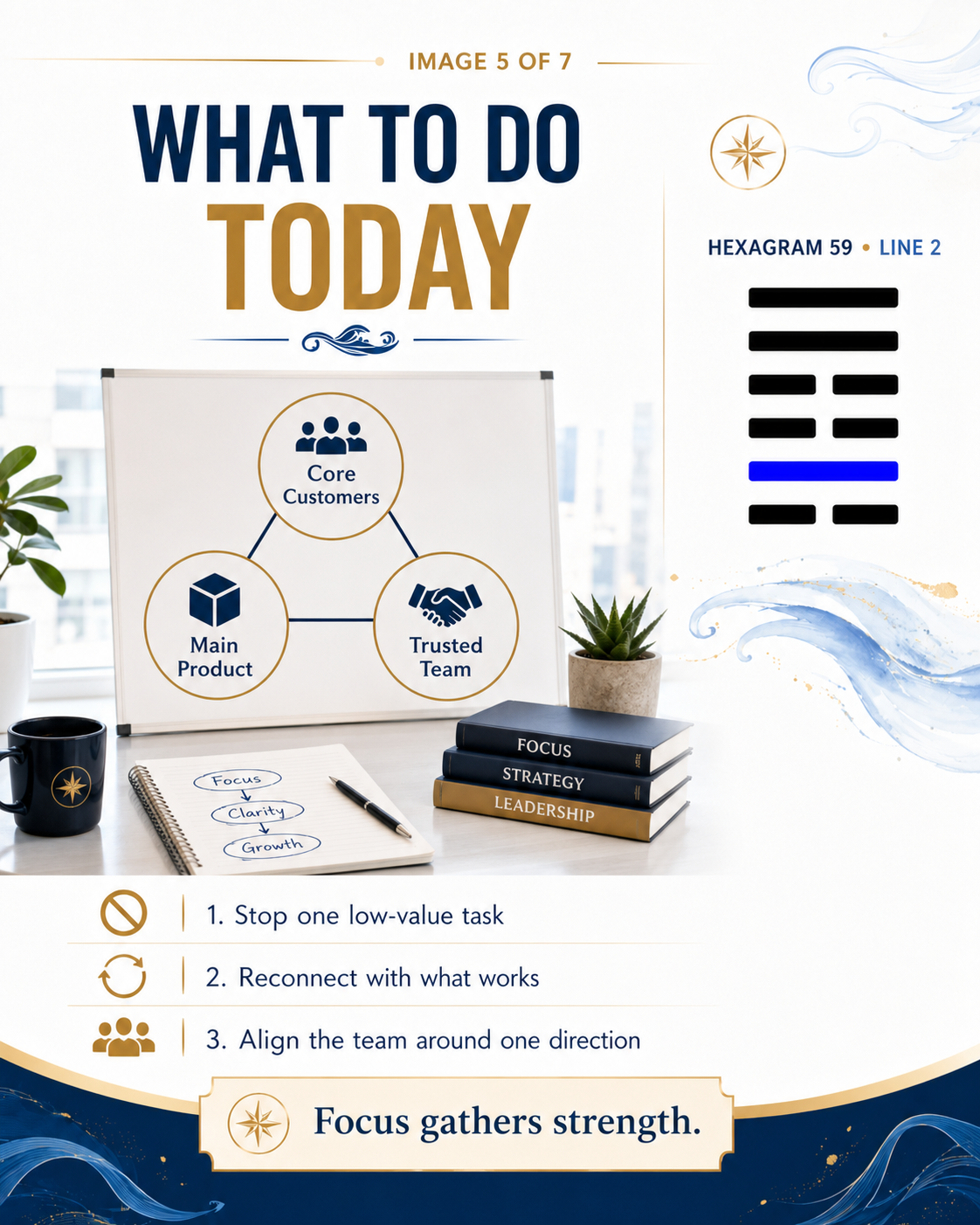
Do not add another project today.
Instead, write down every major activity your company is currently doing.
Then divide them into three groups:
Activities that directly create revenue.
Activities that strengthen customer trust.
Activities that consume time without a clear result.
Choose one activity from the third group and pause it.
Next, identify one core customer, one main product, and one trusted employee.
Give each of them your attention.
Speak to the customer.
Review the product.
Listen to the employee.
Then ask one practical question:
What is the first thing we need to fix?
Do not interrupt the answer.
Do not defend the current system.
Listen until the real problem becomes clear.
That conversation may provide more value than another new strategy.
https://youtube.com/shorts/3hpzXS4Zoco
The Leadership Lesson
A strong leader is not someone who constantly creates movement.
A strong leader knows where movement should stop.
The owner’s job is not to keep everyone busy.
The owner’s job is to keep everyone aligned.
When the organization begins to scatter, employees need a clear point of return.
They need to know:
What matters most?
Who are we serving?
What are we trying to protect?
What must we improve first?
When the owner answers these questions clearly, energy begins to gather again.
Meetings become shorter.
Priorities become easier to understand.
Employees make better decisions.
Customers receive a more consistent experience.
The business may still face difficulty, but it is no longer fighting in every direction.
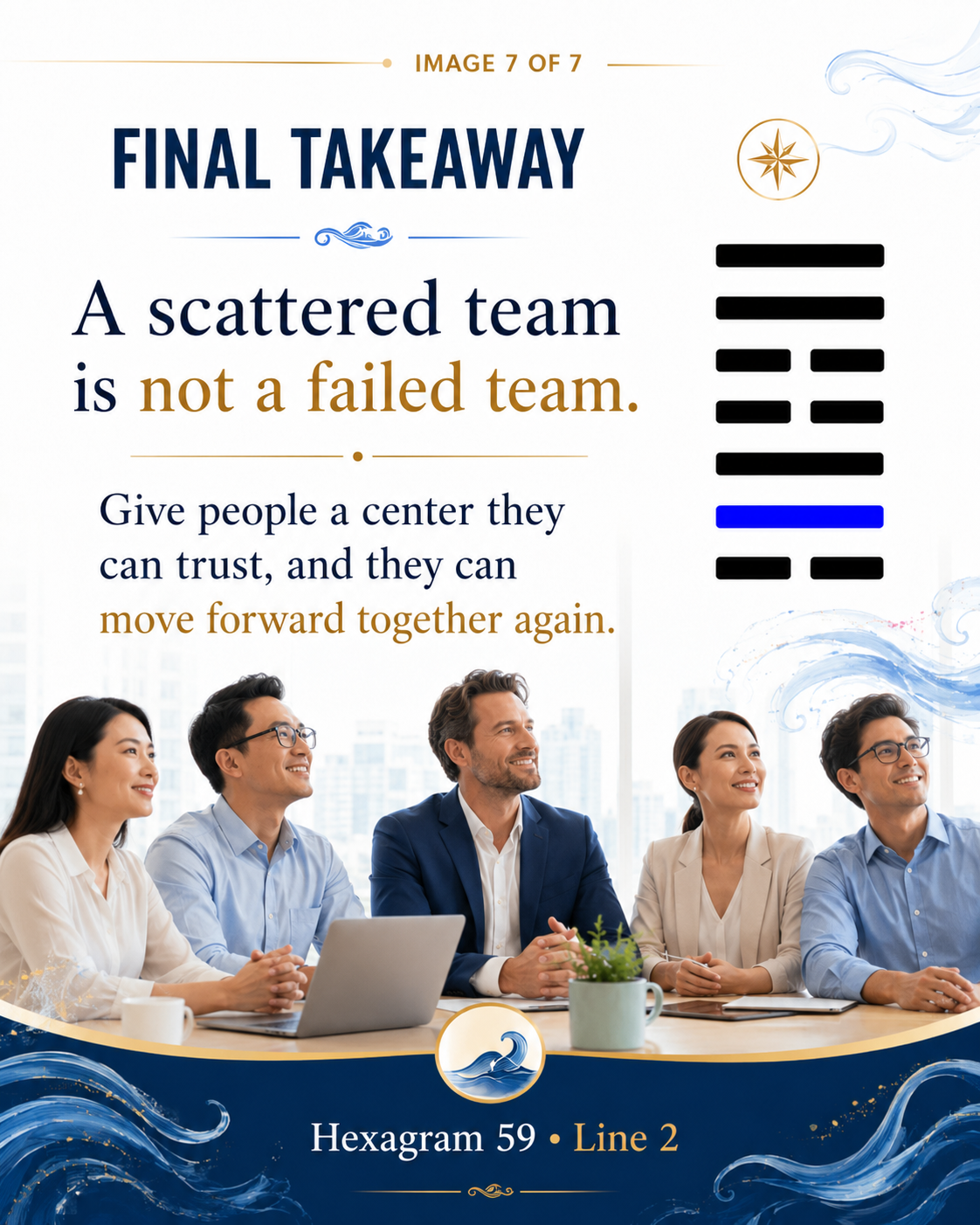
Today’s I Ching Message for Business Owners
Hexagram 59, Line 2 does not promise that every problem will disappear immediately.
It offers a direction.
When the company is scattered, return to what is reliable.
When employees are confused, simplify the priorities.
When sales are weak, look again at the customers who already trust you.
When resources are limited, stop what does not create value.
When the owner feels anxious, do not turn anxiety into another project.
Build the center first.
Then move forward.
One-Line Summary
When your organization is scattered, do not push harder in every direction. Return to your core customers, main product, trusted people, and proven principles.
What is the center of your business right now?
And what is one activity you should stop so that your company can focus again?